
Paver sealing for St. Augustine homes
Paver Sealing in St. Augustine, FL
St. Augustine rebuilt its brick streets, and your own pavers can get a free sealing estimate when you call (904) 719-7441.
- Brings out deeper paver color
- Fresh joint sand helps lock pavers in place
- Gives weeds less room to grow
- Makes the surface easier to keep clean
- Free estimate, no obligation
Request a Free Estimate
Free, no obligation.
Fast, careful paver sealing in St. Augustine
Paver sealing in St. Augustine comes with a free estimate for driveways, pool decks, walkways and courtyards. A local contractor washes the pavers, puts joint sand back and applies the sealer. When you send the short estimate form, expect a reply inside 1 business day, and usually much sooner.
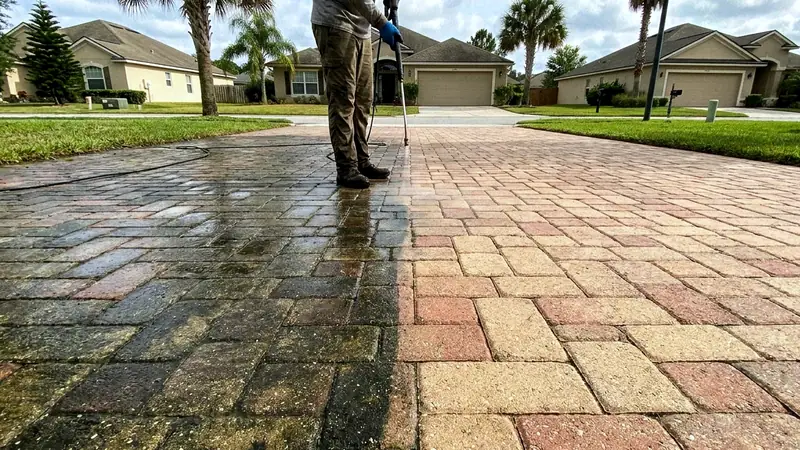
Picture a driveway with gray film along the low edge, weeds in the joints and color that has gone flat. After a wash, fresh sand and a new coat, those same pavers go back to one even tone. If you would rather talk first, call (904) 719-7441 and describe the street, the surface and how long it has been since the last coat.
Why hire a local paver sealing contractor in St. Augustine?
Homeowners in St. Augustine tend to hire locally because a house here may sit on a flood-prone block, inside a historic district, or both. A local contractor asks about those things before quoting, and you can send the short estimate form to start that talk.
A free look first
The contractor measures your St. Augustine pavers and gives you a price before you agree to anything. The estimate is free and carries no obligation, and a reply comes within 1 business day.
A published price range
Companies around Northeast Florida commonly publish $1.75 to $3.25 per square foot to clean, sand and seal. Hold any quote up against that range.
A finish that suits the house
Matte stays quiet beside coquina and old brick. A wet look adds shine, but it shows scuffs sooner on a driveway. Ask to see both on a sample.
You stay in charge
You pick the day, the finish and whether to go ahead at all. A quote from a St. Augustine contractor is free to ask for.
Get Your Free Estimate in St. Augustine
Tell us about your pavers in St. Augustine.
Free, no obligation
What paver problems show up most in St. Augustine?
Silt left behind by floodwater
The city says St. Augustine can flood when ordinary rain lands on top of a high tide, and about 90 percent of residents live in a floodplain. Hurricane Matthew in 2016 flooded Davis Shores, Lincolnville and parts of Abbott Tract. Pavers that water has covered can hold a thin layer of silt. Sealer would lock that layer in, so the wash has to come first. Point out the lowest corner of your drive at the first visit. A job near a creek or marsh edge may need a second rinse for that reason.
Porous stone next to the pavers
Coquina is a shell stone quarried on Anastasia Island, and Wikipedia notes that exposed coquina masonry is slowly deteriorating. Pavers made of brick or natural stone are porous too. A Jacksonville paver company says they need a different sealer chemistry than concrete pavers. Tell the contractor what your walkway or courtyard is made of. If an earlier owner put a heavy gloss on natural stone, mention that too. Sealer made for concrete may not suit porous stone.
Sand that storms and sprinklers pull out
A St. Augustine paver company says most local installs were filled with play sand, which afternoon storms and sprinkler cycles wash out. When joints open up, soil drifts in and weeds take root. The weeds you pull this month started as missing sand. Joint sand made for pavers packs down tighter and stays put longer. That is why a sealing job here includes new sand, not only a coat on top.
Green film on the shaded side
Algae and mildew grow on anything that stays damp, which a St. Augustine company says means side yards and north-facing patios on most lots here. Moss should not take hold on pavers unless the shade is heavy. If your drive stays green by the garage wall, the damp is what to point out at the first visit. A pool screen or a tree on that side is worth mentioning at the same visit. The same shade that keeps a patio cool also keeps it wet.
Salt and wind near the bay
University of Florida experts say many people within a couple of miles of salt water see salt spray damage on plants. St. Augustine sits on Matanzas Bay, with Salt Run, Oyster Creek and the San Sebastian River close by. A Ponte Vedra Beach paver company says salt settles on unsealed pavers and leaves them chalky. Sealed surfaces rinse clean more easily. That is why the contractor asks how close your home sits to the water. Ask which of those waterways is closest to your street.
Which St. Augustine neighborhoods can get paver sealing?
Homes in every part of St. Augustine can ask for a sealing estimate, and the older districts are no exception. Fullerwood Park runs east of San Marco Avenue, and its eastern edge curves along tidal marshes and Hospital Creek. Most houses there are one- and two-story Colonial Revival or Bungalow homes. Tell the contractor your street when you send the short estimate form.
Nelmar Terrace was platted in 1886 and re-platted in 1913, then sold as an upscale suburb with big lots. Its homes include Spanish Revival, Mediterranean Revival, Tudor and Craftsman styles. Big lots can mean long drives and wide courtyards, so the measured area, and the total, may run higher. Call (904) 719-7441 and the contractor can explain how the area gets measured.
Davis Shores, on the northwest corner of Anastasia Island, was swampy lowland until a 1925 dredge-and-fill project raised it. Most work inside the city's five Historic Preservation districts needs a Certificate of Appropriateness. Its page does not mention paving, so check your district on the city map. Then send the short estimate form once you know what applies.
What does paver sealing cost in St. Augustine?
Northeast Florida companies list clean, sand and seal work at $1.75 to $3.25 per square foot. Where a St. Augustine job lands inside that range depends on the old coat, the shade and how much sand is gone. To put a number on your driveway or courtyard, send the short estimate form.
Access moves a quote too. A gate, a tight side yard or a courtyard behind an old wall adds prep time, and one Jacksonville cost guide says smaller jobs cost more per square foot. Stripping a failed coat adds cost as well. To talk through your lot, call (904) 719-7441.
| Paved area | Typical example | Clean, sand and seal |
|---|---|---|
| 300 sq ft | Small patio or walkway | $525 to $975 |
| 600 sq ft | Two car driveway | $1,050 to $1,950 |
| 1,000 sq ft | Large driveway or pool deck | $1,750 to $3,250 |
| 1,500 sq ft | Driveway plus pool deck | $2,625 to $4,875 |
Math based on the $1.75 to $3.25 per square foot that Northeast Florida paver companies published as of November 2026. Your contractor sets the actual price after seeing the surface. Repairs, leveling and stripping failed sealer are usually extra.
How does a paver sealing job work in St. Augustine?
Walk the lot and read the old coat
The contractor looks at how water drains on your St. Augustine driveway and where it sits after a storm. Sunken or lifted spots get reset first, because sealing over a dip keeps the dip. If the pavers were sealed before, the old product matters, since water-based sealer cannot go over solvent-based sealer. Mention any past flooding on your block. Pools, screen enclosures and landscaping are noted at this stage so they can be protected. Photos of the worst spots, snapped before the visit, give the contractor a head start.
Wash off silt, algae and salt film
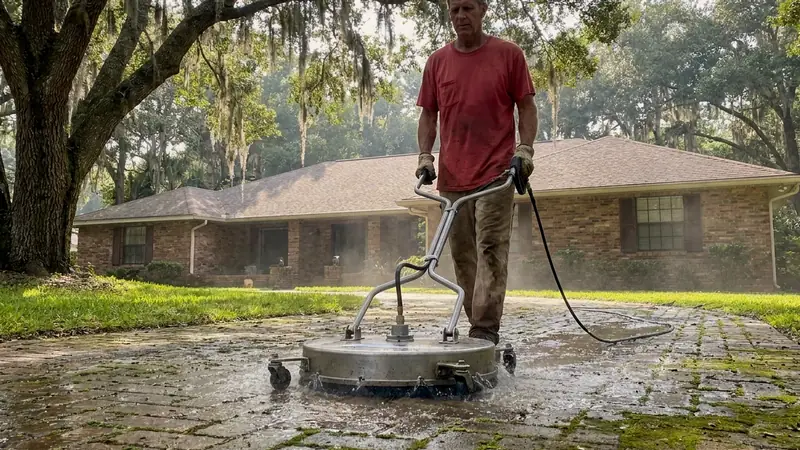
Washing comes next. The contractor lifts the silt that tides and storm water leave, the green film from shady side yards and any salt residue. Rust and oil spots are treated now, because sealer would lock them in. Brick and natural stone get gentler handling, since they are more porous than concrete. Rinse water stays off coquina and older masonry wherever the pavers meet the house. The contractor tests a small hidden spot first if the stone looks fragile.
Put sand back in the joints
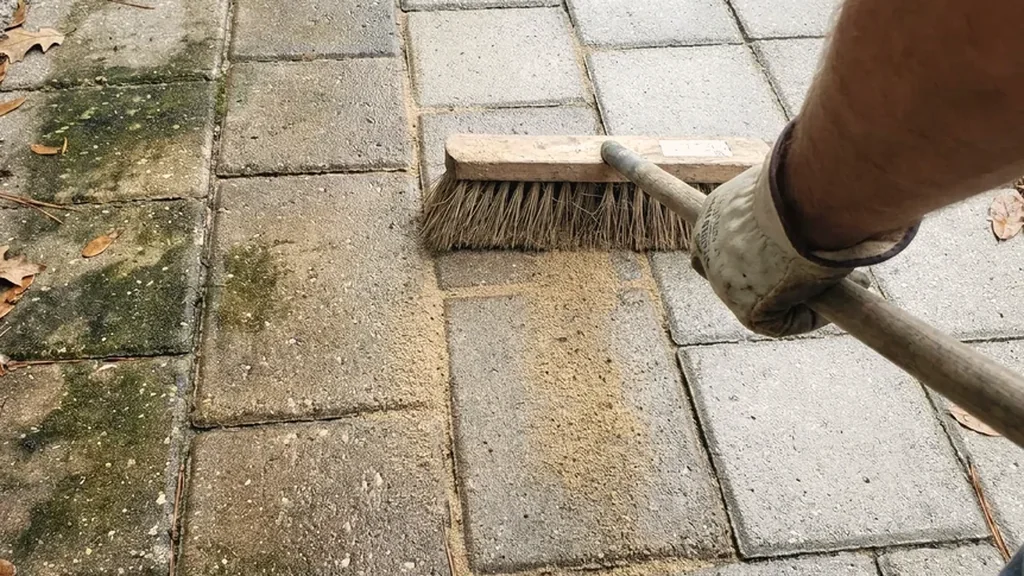
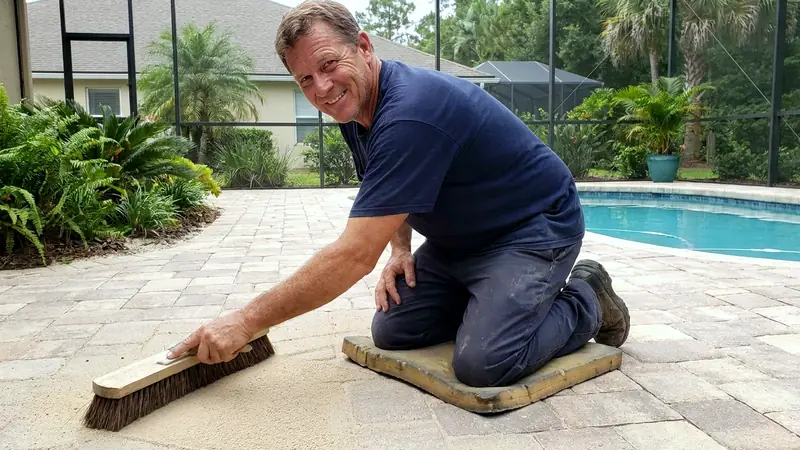
The wash lifts joint sand out, so fresh sand goes in before any sealer. Open joints let soil in, and that is where weeds start. The contractor sweeps the sand in until the joints are full and then clears the surface. Low joints that are years old need extra sand, so budget extra time. Once the sand is in, the surface is swept clean so nothing loose gets sealed in.
Wait for a dry window
Sealer needs a dry surface. In St. Augustine, November rain averages about 2.32 inches against 7.18 in August and September, so the dry months give more room. A shaded courtyard holds damp long after a sunny drive has dried out. A careful contractor waits, since sealing damp pavers is a common cause of white, cloudy sealer. A Jacksonville paver company says drying after cleaning is harder in humid months. Waiting a day or two for a clear forecast costs little compared with redoing a cloudy coat.
Apply the finish you chose
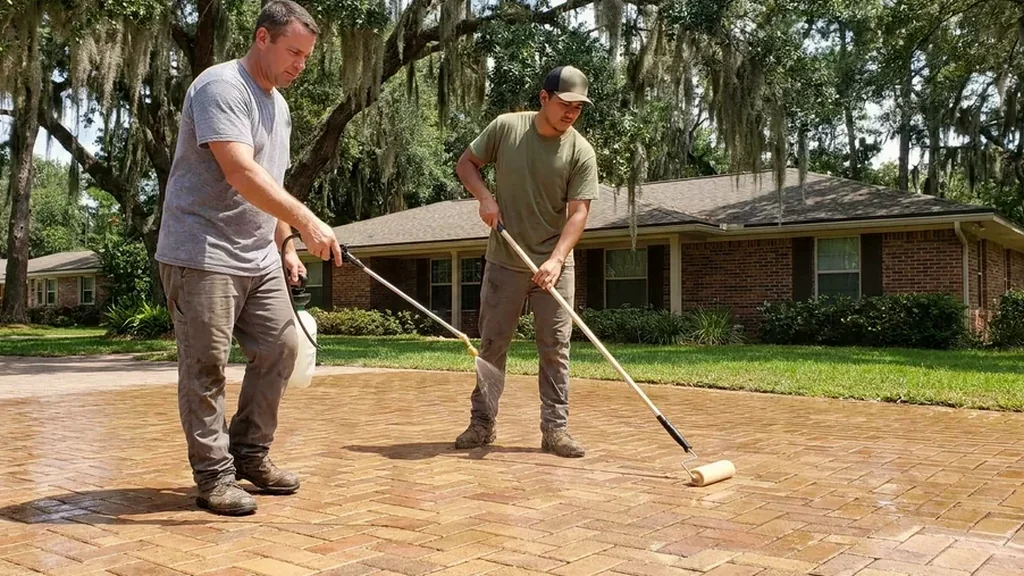
The sealer goes on last. A Jacksonville paver company says professionals spray it and then back-roll it for even coverage. A wet look shows scuffs sooner than matte, which matters on a drive lane. Quotes from local companies put a new coat at two to five years out. Walking on the surface is usually fine within a few hours, while cars wait about a day. Ask for the product name and keep it, because the next contractor will want to know what is on the surface. Keep sprinklers pointed away from the surface until it has cured.
Complete paver services in St. Augustine
A St. Augustine sealing job moves in four stages: wash, re-sand, dry, then seal. Each stage depends on the one before it, so a skipped wash leaves dirt under the finish. Ask the contractor how long each stage should take at your address. To start that talk, call (904) 719-7441.
Driveways take tires and street water, while pool decks face splash and strong sun. Brick courtyards and walkways beside old coquina walls are more porous than concrete, so they need a sealer matched to the stone. Tell the contractor which of these surfaces you have when you send the short estimate form.
Sealer choice starts with what is already on the pavers, because water-based sealer cannot go over solvent-based. After that comes the finish. A wet look adds shine, matte stays quiet, and one Jacksonville company offers a penetrating finish made for travertine and coquina. If you are unsure what an earlier owner used, call (904) 719-7441.
Plan the date around the weather. St. Augustine has frequent summer thunderstorms and a drier winter, and a Jacksonville cost guide says fall sealing after hurricane season protects pavers through the dry months. A good date is a dry day with more dry days behind it. To pick one for your street, send the short estimate form.
Questions to ask before you hire
- Can you get rust stains from sprinkler water off my pavers before sealing?
- Will you test the sealer on a hidden spot and show me the result?
- How do I choose between a natural finish and a wet look?
- How long before I can walk, drive and set furniture on the finished surface?
- Who do I call if something looks wrong after the job?
- What happens if the finish looks milky or blotchy the next day?
- Will the sealer you suggest hold up to salt spray and strong sun near the water?
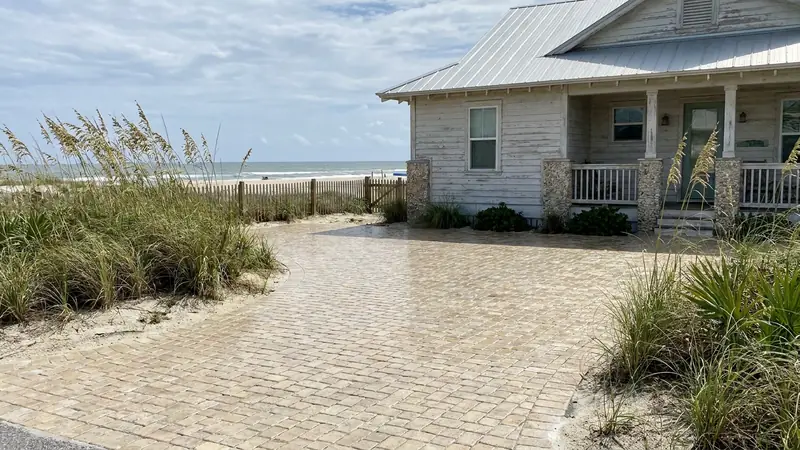
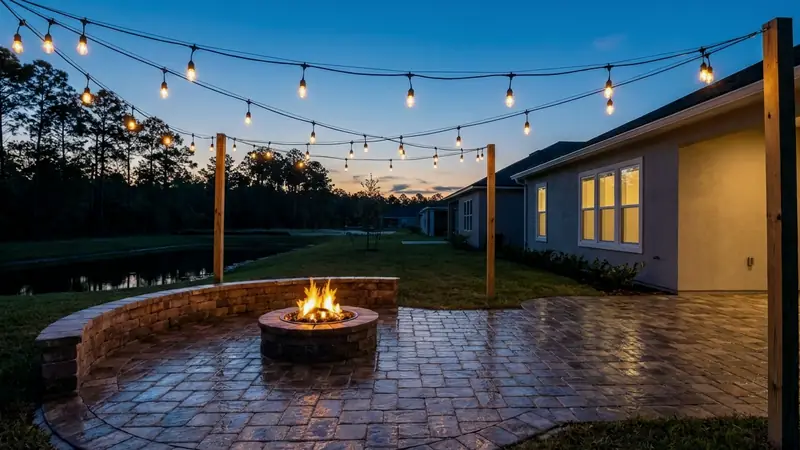
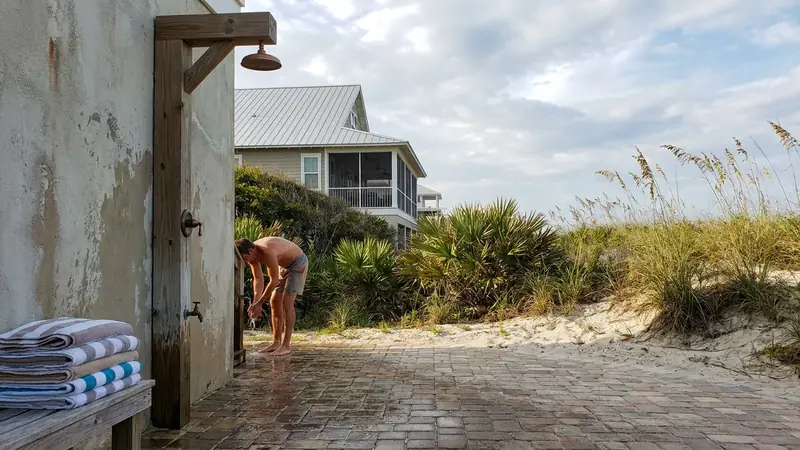
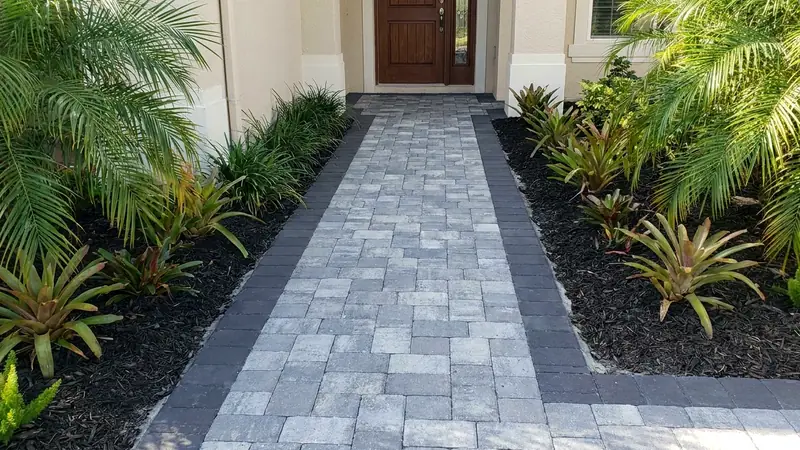
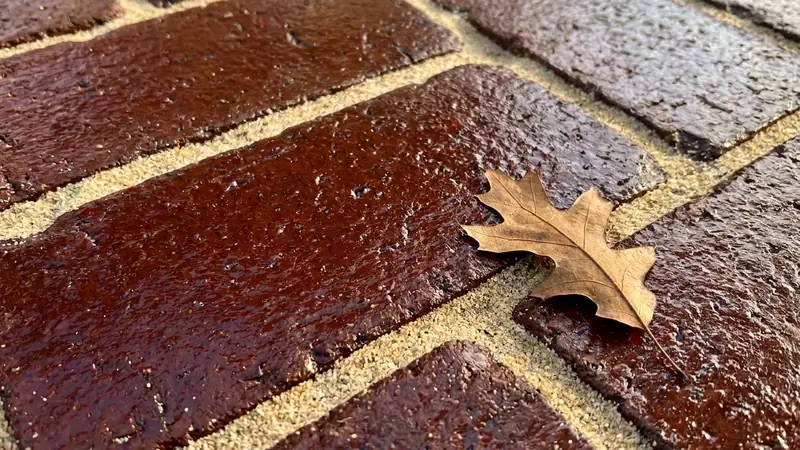
What do sealed pavers look like around St. Augustine?
Why local matters in St. Augustine
A contractor who works in St. Augustine asks when your street last took water. Davis Shores, Lincolnville, the historic districts and parts of Abbott Tract all flooded during Matthew, according to the city. How much washing comes first depends on that history. To reach a contractor who already works these streets, call (904) 719-7441.
Tides add a second question. The city says flooding can happen when ordinary rain arrives with a high tide, and a Flagler College report describes king tides covering downtown streets in October 2025. A sealing job near the water has to wait out that kind of week. You can send the short estimate form and ask how the contractor plans around the tides.
Older homes add one more layer. A small Lincolnville lot, with the house close to the street, leaves rinse water little room to go. A Spanish Revival home in Nelmar Terrace and a coquina wall downtown each need their own care. If that sounds like your house, send the short estimate form and say roughly when it was built, with no obligation to hire anyone.
Does a contractor who knows St. Augustine's streets matter?
Yes, because St. Augustine has been laying brick in its streets for a long time. Archaeologists found that brick followed compacted shell, earth and cypress as the first permanent street material. A St. Augustine Blend brick paver was made to match the tans and light reds of historic brick, with about 10 percent embossed EST 1565. If you live near Hypolita, Treasury or Spanish Street, send the short estimate form.
Landmarks give a contractor an easy way to place your home: the Castillo de San Marcos, Flagler College in the old Ponce de Leon Hotel, the Lightner Museum and the Cathedral Basilica. The Bridge of Lions, finished in 1927, carries A1A across Matanzas Bay to Anastasia Island. Mention which side of the bay you are on when you call (904) 719-7441.
Frequently Asked Questions
Is sealing pavers a good idea in St. Augustine?
Yes, it is worth considering here, though one local company points out that sealing is not required. According to a local paver company, sealing guards against stains, fading and erosion. With the rain, tides and sun this area gets, a free estimate shows what your pavers need.
How long do paver sealers last in St. Augustine?
The usual gap between coats runs two to five years, going by company quotes. One St. Augustine company recommends resealing every 3 to 5 years depending on traffic, weather and wear. Another plans about every 2 to 3 years, and sooner on drives and pool decks.
Can you pressure wash brick pavers in St. Augustine?
Yes, but the pressure has to be chosen with care. A home guide warns that a pressure washer can push sand out from between paving stones and leave gaps. A contractor refills the joints with sand before sealing, and brick, being porous, needs a sealer made for it.
Is it good to seal pavers right after they are installed?
Usually not right away. A St. Augustine paver company says brand-new pavers should wait about 60 to 90 days. That wait lets trapped moisture escape and lets any white mineral haze come to the surface, where it can be treated before the sealer goes on.
In a historic district, do I need city approval to seal pavers in St. Augustine?
It depends on your address. Most work in the city's five Historic Preservation zoning districts needs a Certificate of Appropriateness, and the fee list names site work. The page does not mention paving or driveways, so check your district on the city map and ask city staff.
Will sealing fix pavers that have sunk or lifted?
No, since a coat of sealer locks in whatever is already there. A St. Augustine paver company says sinking, heaving or rocking pavers need an installer to reset them first. Point out the low spots at the first visit so they are fixed before the sealer goes on.
How do I know my St. Augustine pavers need a new coat?
A St. Augustine pressure washing company says water that soaks in and darkens the pavers fast means the old sealer is gone. A peeling or cloudy coat is stripped first, before any new sealer goes on. Beading water means the coat is still doing its job.
What makes paver sealing cost so much in St. Augustine?
Prep, not the sealer itself, takes most of the cost. A Jacksonville paver company says it spends about 2 to 3 hours of prep for every hour of sealing, and old failing sealer sometimes has to be stripped. Smaller jobs cost more per square foot. Plan on $1.75 to $3.25 per square foot to clean, sand and seal, the range commonly published around Northeast Florida.
Ready for a Free Estimate in St. Augustine?
Call (904) 719-7441 and tell us about your pavers.
Free, no obligation